Most people meet art at the end of a long chain. They see paintings hung straight, installations sitting flush with the floor, wall or ceiling, vitrines closed and light fixtures working as intended.
They do not see the storage room, the crate, the van. Nor the customs entry, registrar chasing dates and the handler checking clearances twice. Like shipping in Rose George’s Ninety Percent of Everything, our system matters because it stays unseen: Logistics was the preamble for millions seeing Tutankhamun’s mask and the Lewis Chessmen on loan.
What are the standards?
Fine art logistics matters most when collections are active: on loan, returning, being sent to storage, being inspected. None of this is unusual. Each of them does however carry practical demands, and that’s what we’re going to explore.
The Collection Trust, the U.K.’s standards authorities for museums, galleries and other collections, has very specific guidance around borrowing. The British Library for example, states that it requires 12 months of notice for new exhibition loan requests. The V&A also has a 12-month standard and stipulates an assigned registrar to be put in charge of all loan requests to coordinate a response. This level of fine-toothcomb management tells a story all by itself: fine art logistics are the most delicate of processes.
The storage
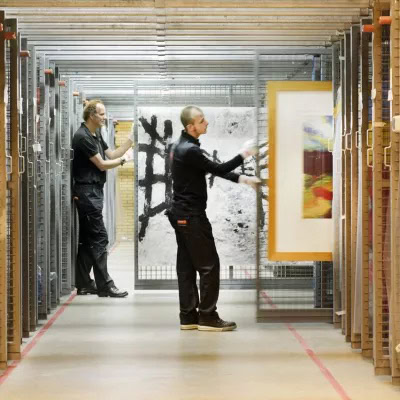
Storage sits at the centre of this. A specially fitted out warehouse is the most crucial asset. It is the home-away-from-home for almost every single item you’ve ever seen at a museum or gallery.
The conditions of your collection need to be preserved but they still need to be usable. In essence, good storage supports access, retrieval, reporting and onward movement without turning each request into a disruption. All industry-standard fine art warehouses should, as a baseline standard, have viewing rooms, customised crating and specialised transport.
The technical requirements
In 1979, Mark Rothko’s famous Harvard University murals were taken down from their penthouse dining room location. Decades worth of damage, primarily because of sunlight and food residue, had severely faded and damaged them. They later underwent a high-tech restoration in the mid-2010s, but it focuses attention on just how damaging poor environmental conditions can be to art.
This, again, is where fine art logistics plays a crucial role. Every piece we handle needs to be perfectly handled. Every piece needs to have specific climactic requirements. Any deterioration needs to be minimized and, hopefully, arrested entirely. Given that we live in a world where the past is regarded increasingly as something that needs to be treasured, this is an aspect of care that needs to be without any fault.
Temperature and relative humidity are the first and most important lines of defence, according to the Smithsonian. Ignoring this means mould, pests and embrittlement. That’s why climate-controlled warehouses aren’t a decorative claim, they are one of the most basic requirements of stewardship. Real-time asset tracking and monitoring, intelligent environmental controls, surveillance and controlled access are also absolute necessities. Everything here, and everything throughout fine art logistics is about minimizing risk.
The people
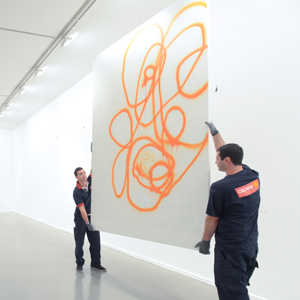
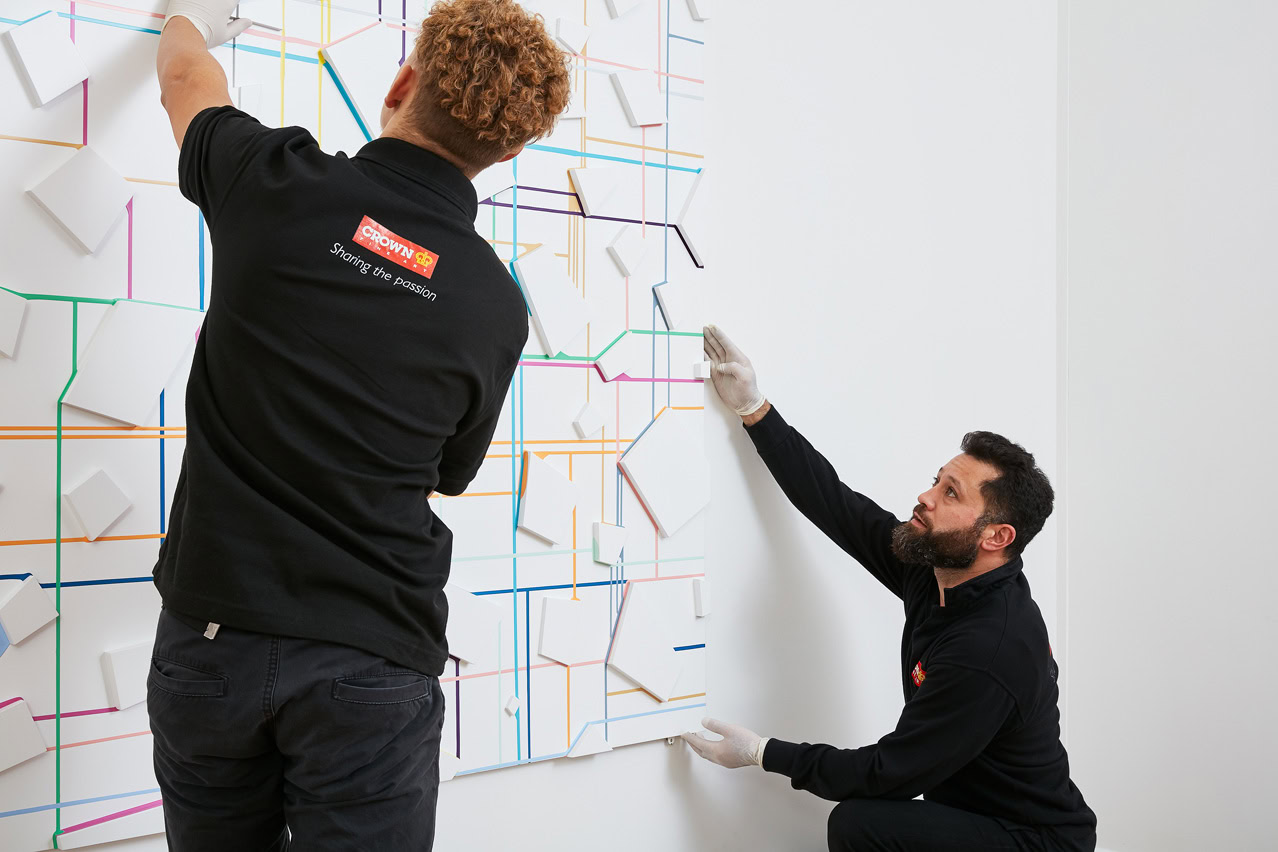
These principles apply to the people involved too. Art handling isn’t just standard freight with a higher insurance value. Human judgment at close range is important too. For example, the Canadian Conservation Institute provides specific guidance around handling that starts with “understanding the object and preparing the route” for example. In other words, expert staff matter because the risks are usually ordinary here. A badly judged turn, a rushed handoff, poor support during packing or just simple ignorance around that Corinthian capitol’s vulnerabilities can create problems, big problems.

Transport and location
Any vehicle transporting fine art needs to be built for that general purpose, this means air‑suspension, climate control, remote tracking, integrated alarms, and precise temperature and humidity management keep conditions stable from door to door (not just origin and destination).
Keeping each artwork with the same team throughout a journey adds control. Fewer handoffs mean fewer chances for vibration, delays or miscommunication to creep in, if you’ve ever watched a crowded loading bay, you’ll have an idea of what is meant here.
Crating fine art objects follows the same principle. A crate is, for any serious company or institution, part of the transport plan. Think of a sculpture travelling from London to Basel: the crate is engineered for airport handling, road transfer, humidity shifts and, most importantly, the specific vulnerabilities of the work itself.
Location is also (maybe surprisingly) incredibly important. Proximity to a major airport shortens time of your items in transit and removes unnecessary stages in the chain of custody we mentioned. This is why alongside our central London facilities, we operate another specialist site with direct proximity to Heathrow, allowing rapid collection, customs handling and secure storage to function as one connected system.
None of the above is visible. It is not meant to be. If this process is invisible, then the job is being done right. When the hidden system is working, the piece arrives when expected, the condition is understood, you are reassured and the registrar keeps their job.
If you’ve got a fine art project you’d like to talk with one of our experts about, give us a call or send us an email. We’ve worked with over 7000 galleries, museums, collectors and other institutions and operate facilities across all the world’s major art markets.